


Click to watch Introduction to Sentek Dynamics video
Located in the center of Silicon Valley, Sentek Dynamics offers a comprehensive product line with complete environmental solutions for today's demanding test requirements.
Our testing lab and demonstration facility located in North Carolina offers systems that are tested and assembled in the USA.
What’s Required to Bring Vibration Testing In-House?


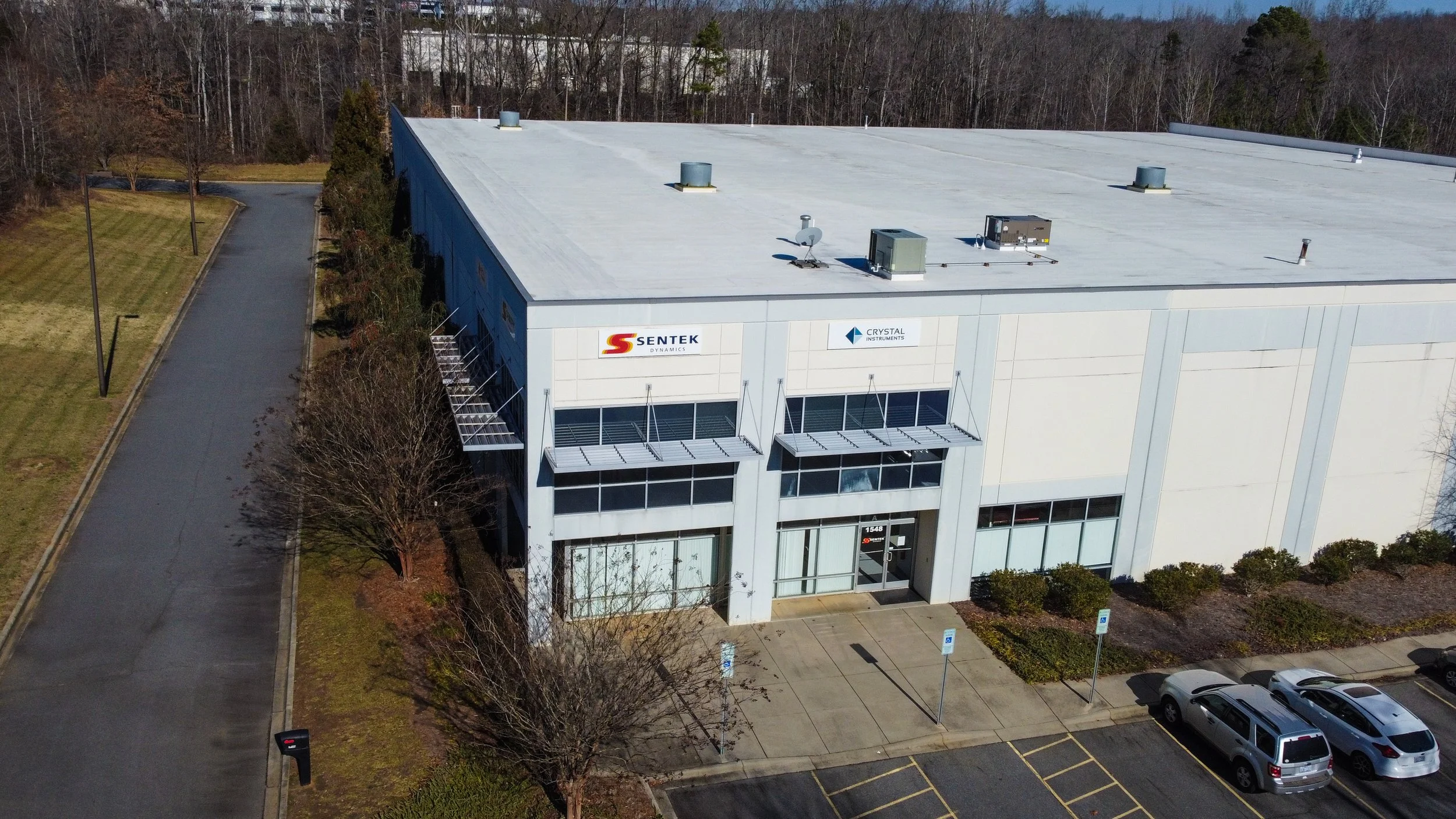
Sentek Dynamics has welcomed two new team members to its facility in Kannapolis, North Carolina: Adam Lazzari, Project Coordinator, and Caden Dearborn, Applications Engineer. Adam joins the Operations team to support project coordination, order management, and technical assistance. Caden brings a mechanical engineering background in industrial machine design to his applications engineering role. Together, they strengthen the support that helps customers move from testing requirements to practical vibration testing solutions.

When flexible structures are excited at or close to one of their natural frequencies, most of the energy is released and the fatigue damage significantly increases. Due to this, the assessment of modal components (i.e., natural frequencies, damping and mode shapes) is fundamental in structural dynamics.

Sentek Dynamics is proud to announce the development of a groundbreaking safety apparatus for single-degree-of-freedom electrodynamic shaker systems.

March 16-18, 2027 | Santa Clara, California
Modal analysis is an essential technology behind solving noise and vibration problems. This seminar focuses on the measurements needed to make a successful test as well as the reduction of that data to obtain the dynamic characteristics of a structure or system – that is the frequency, damping and mode shapes. Lectures will be augmented with participant collection of their own data sets (working in teams of 2 or 3) with separate test setups for the seminar.